Engineering Existing Facilities: Seven Challenges Every Brownfield Project Must Solve
Greenfield engineering starts with design freedom.
Brownfield engineering starts with constraints.
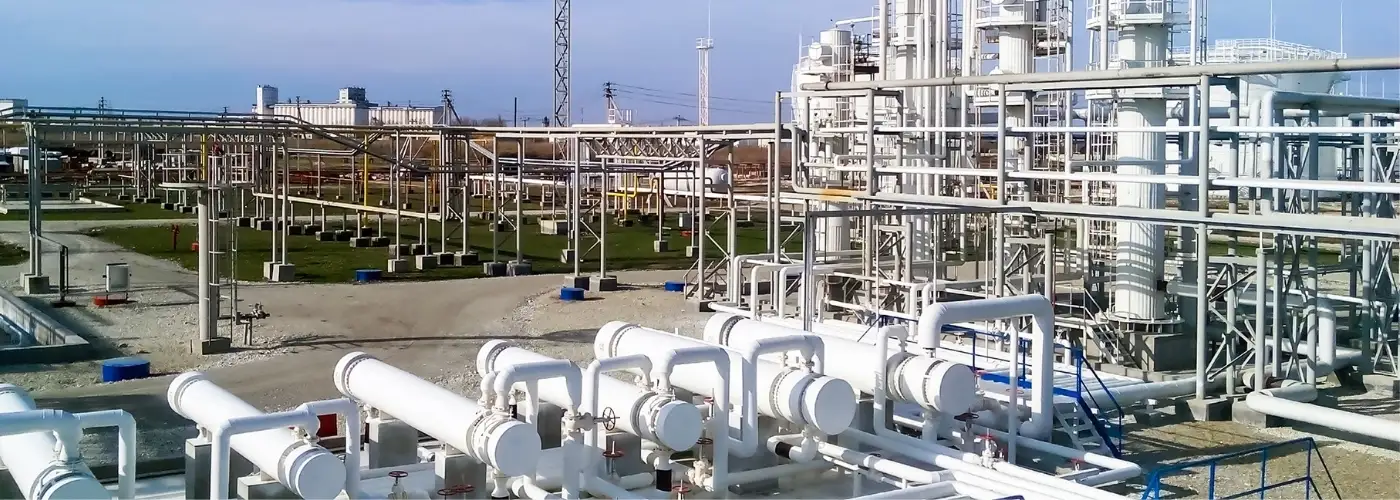
Every engineering decision must accommodate an existing facility that was probably not designed for the modification being proposed. Existing equipment, operating conditions, structural capacity, utility limitations, maintenance access, shutdown schedules, regulatory obligations, and years of undocumented changes all become part of the design basis.
The challenge is therefore not simply to engineer a new system. It is to integrate that system into an operating asset without compromising safety, operability, reliability, or future maintainability.
At PMECH, we have delivered engineering for greenfield developments, capacity expansions, debottlenecking, plant modifications, and brownfield projects across the oil & gas, petrochemical, power, and process industries for nearly four decades. While every facility presents its own complexities, certain engineering challenges consistently define projects involving existing assets.
1. The Existing Plant
The engineering basis for a brownfield project begins with understanding what actually exists in the field.
Legacy drawings often represent the plant as it was commissioned, not as it exists today. Over years of operation, modifications, maintenance interventions, temporary works, and operational improvements frequently alter piping, structures, supports, cable routing, and equipment layouts. Not every change finds its way back into the engineering documentation.
Engineering based solely on historical drawings introduces unnecessary risk.
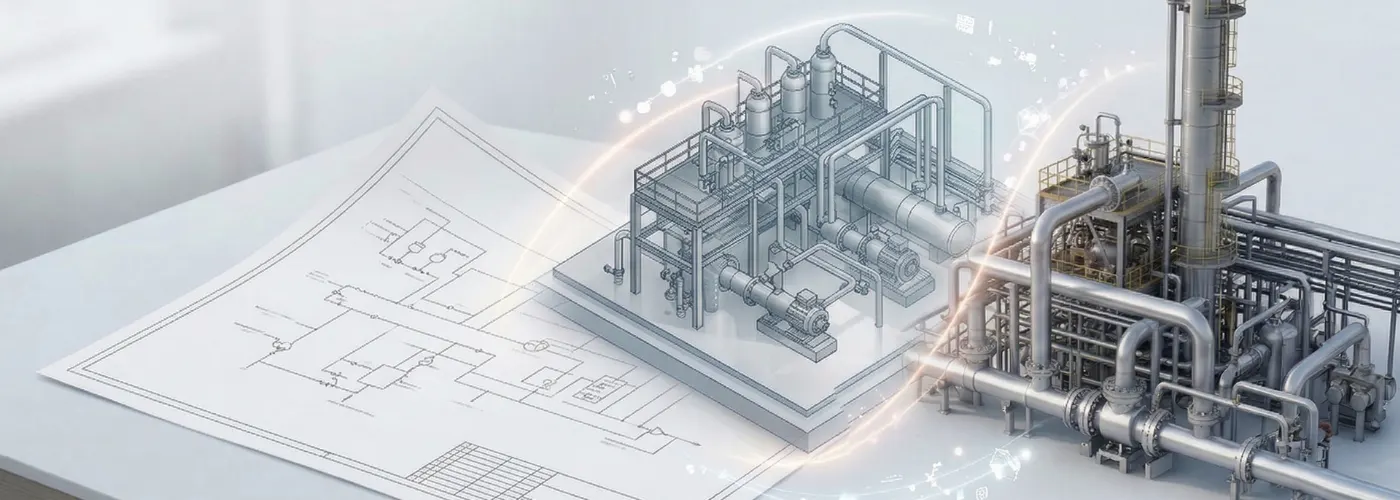
Where documentation cannot be fully relied upon, laser scanning and registered point cloud models provide the engineering baseline, allowing multidisciplinary design to proceed against verified field conditions rather than assumptions.
2. Every New Addition Creates Multiple Engineering Interfaces
Unlike greenfield projects, new equipment is rarely engineered in isolation.
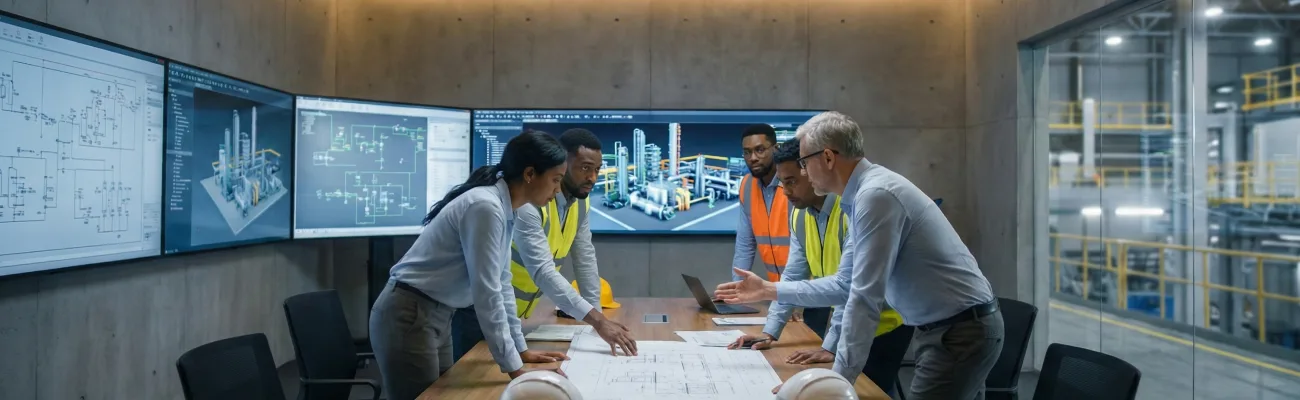
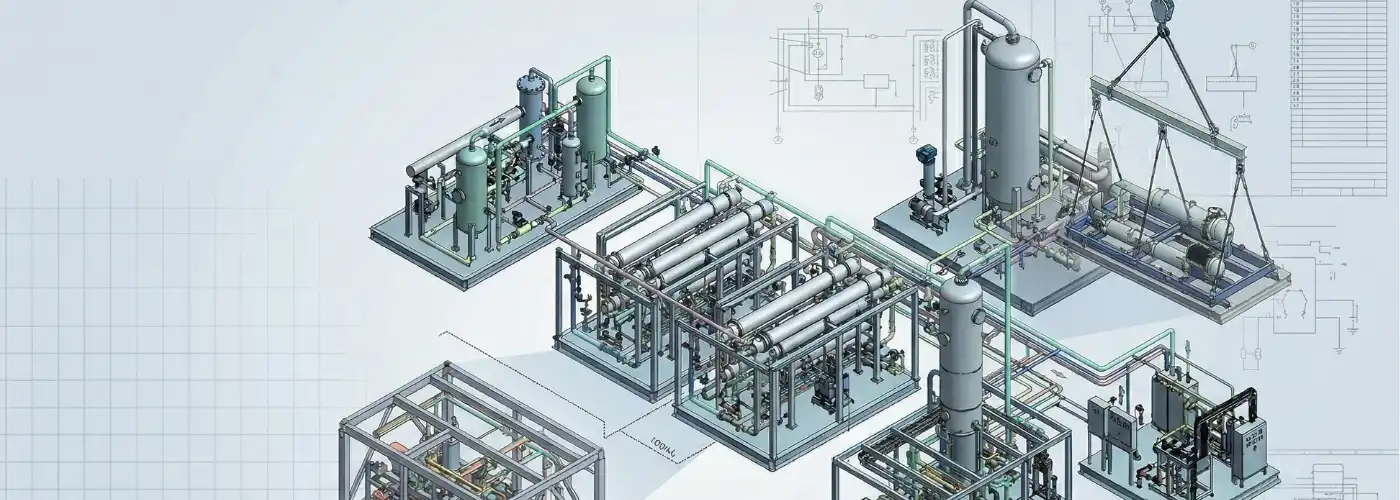
A compressor installation, vessel replacement, or new process package immediately creates interfaces across process, piping, mechanical, civil, structural, electrical, instrumentation, and controls.
A new nozzle may alter piping flexibility. Additional equipment loads may require structural reassessment. Electrical demand affects load flow and short-circuit studies. Control philosophy, cause-and-effect logic, alarm management, and SIS interfaces may all require review.
Similarly, process modifications can influence hydraulics, relief scenarios, utility consumption, and downstream equipment performance beyond the immediate scope of work.
The engineering challenge lies less in designing the new equipment and more in understanding its impact on the existing facility.
3. Plot Space
Brownfield projects are often described as having "limited space," but the real constraint is far more complex than available footprint.
Equipment arrangement must accommodate maintenance envelopes, crane accessibility, piping routability, cable tray corridors, escape routes, hazardous area requirements, structural framing, existing underground services, and future operability.
Constructability must be evaluated alongside layout development—not after it.
An efficient layout on paper is of little value if equipment cannot be installed, maintained, or safely accessed throughout its operating life.
4. Field Execution
Isolation philosophy, tie-in sequencing, lifting studies, temporary works, heavy equipment access, modularization strategy, material handling routes, and construction methodology all influence detailed engineering.
The most successful brownfield projects are typically those where construction considerations are incorporated early rather than deferred until site execution.
Good constructability reviews often eliminate site problems before they ever occur.
5. Shutdown Planning
Brownfield projects are frequently governed by shutdown windows measured in days rather than weeks.
Tie-in drawings, fabrication deliverables, spool verification, material availability, inspection requirements, work packs, and execution sequencing all depend on engineering being complete well in advance of the outage.
Engineering delays rarely remain engineering issues. They quickly become schedule risks with direct implications for production and project cost.
6. Existing Facilities Require Engineering Beyond Code Compliance
Compliance on a brownfield project extends beyond satisfying current design codes.
Existing assets often contain equipment designed to earlier editions of standards, legacy control philosophies, ageing infrastructure, previous modifications, and operating constraints that must all be evaluated before introducing new systems.
Structural reserve capacity, pressure relief adequacy, hazardous area classification, fire protection philosophy, functional safety requirements, and environmental compliance frequently require reassessment as part of the modification scope.
Good Engineering judgement is essential in determining where existing systems remain adequate, where upgrades become necessary, and how new requirements can be integrated without creating unintended consequences elsewhere in the facility.
7. Experience Reduces Engineering Risk
Brownfield engineering is fundamentally an exercise in managing interfaces. Every modification interacts with existing process conditions, equipment, utilities, structures, controls, operations, maintenance practices, and construction constraints.
This is why successful brownfield projects depend not only on technical competence within individual disciplines, but on multidisciplinary coordination and engineers who understand how decisions propagate across an operating facility.
Greenfield vs Brownfield Engineering — At a Glance
| Factor | Greenfield | Brownfield |
|---|---|---|
| Engineering Basis | Design developed from a clean site with defined project requirements | Design developed around an existing operating facility and its constraints |
| Design Flexibility | High – Layout, equipment arrangement, and utilities can be optimized | Limited – Existing equipment, structures, and utilities dictate the design |
| Existing Documentation | Generated as part of the project | Often incomplete, outdated, or inconsistent with actual field conditions |
| Engineering Interfaces | Primarily between new systems | Extensive interfaces between new and existing process, mechanical, civil, electrical, and control systems |
| Constructability | Conventional construction sequence | Influenced by access restrictions, tie-ins, temporary works, and operating plant conditions |
| Shutdown Requirements | Not applicable | Critical – Engineering and execution must align with fixed outage windows |
| Project Risk | Risks largely associated with design development and construction | Additional risks from undocumented conditions, live operations, and unforeseen field interfaces |
Engineering Existing Facilities Demands a Different Mindset
Greenfield and brownfield projects require the same engineering fundamentals, but they demand different priorities.
Greenfield engineering focuses on creating an optimum design.
Brownfield engineering focuses on integrating that design into an existing facility with minimal disruption to operations while maintaining safety, reliability, constructability, and long-term asset integrity.
That shift in mindset is what distinguishes engineering existing facilities from designing new ones.
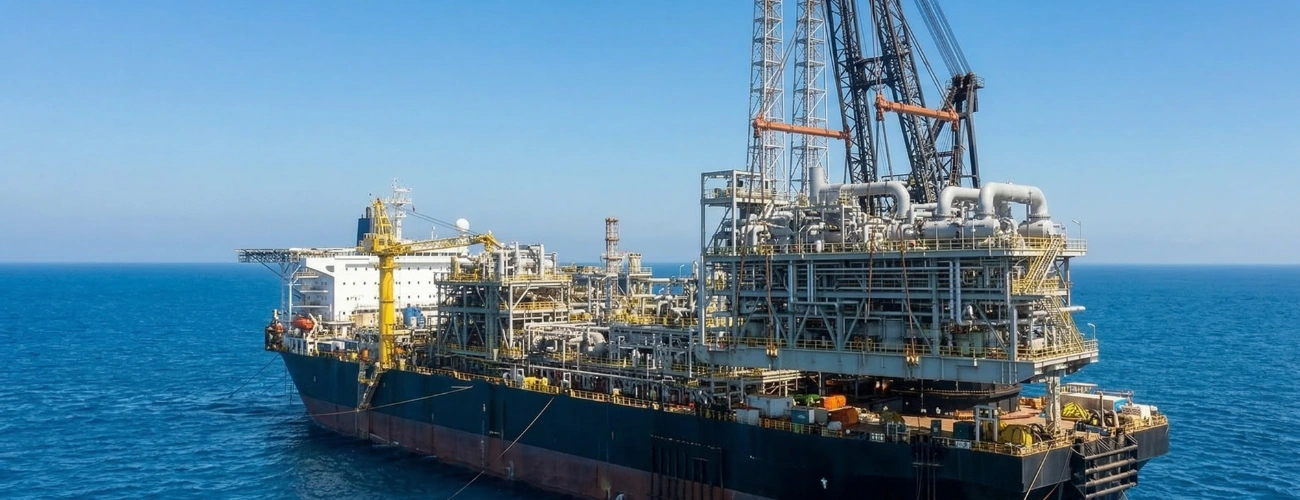
At PMECH, that approach has been applied across nearly four decades of engineering for refineries, offshore facilities, tank terminals, petrochemical plants, fertilizer complexes, power plants, and other process industries—helping clients expand, modify, and modernize critical infrastructure with confidence.
Get in Touch
If you are planning a revamp or brownfield project and want to discuss the engineering approach, reach out to us at info@pmecheng.com or visit www.pmecheng.com