API 620 / API 625 Double Wall Ammonia Tank Erection: Lessons From a Refrigerated Ammonia Tank Project
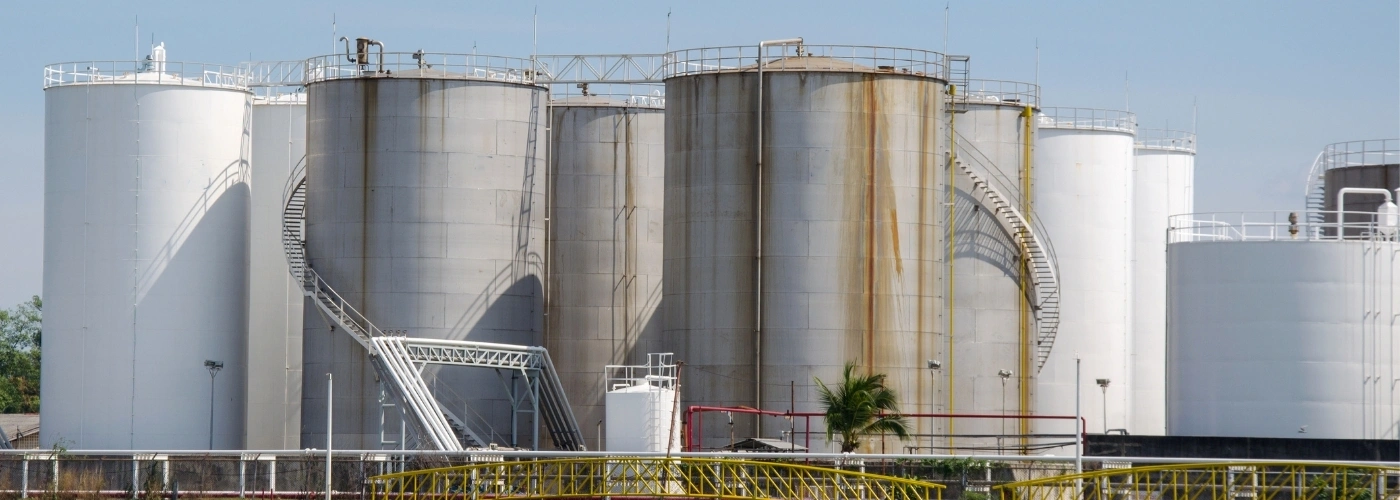
Building a refrigerated ammonia storage tank is not like building most other industrial structures. The product is hazardous, the operating temperature is -33°C, and getting something wrong during erection can follow the tank through its entire service life.
This blog draws from PMech's direct project experience erecting a double wall full containment ammonia tank to API 620 Appendix R and API 625. These are the lessons that don't always surface in project handovers.
The Tank Configuration
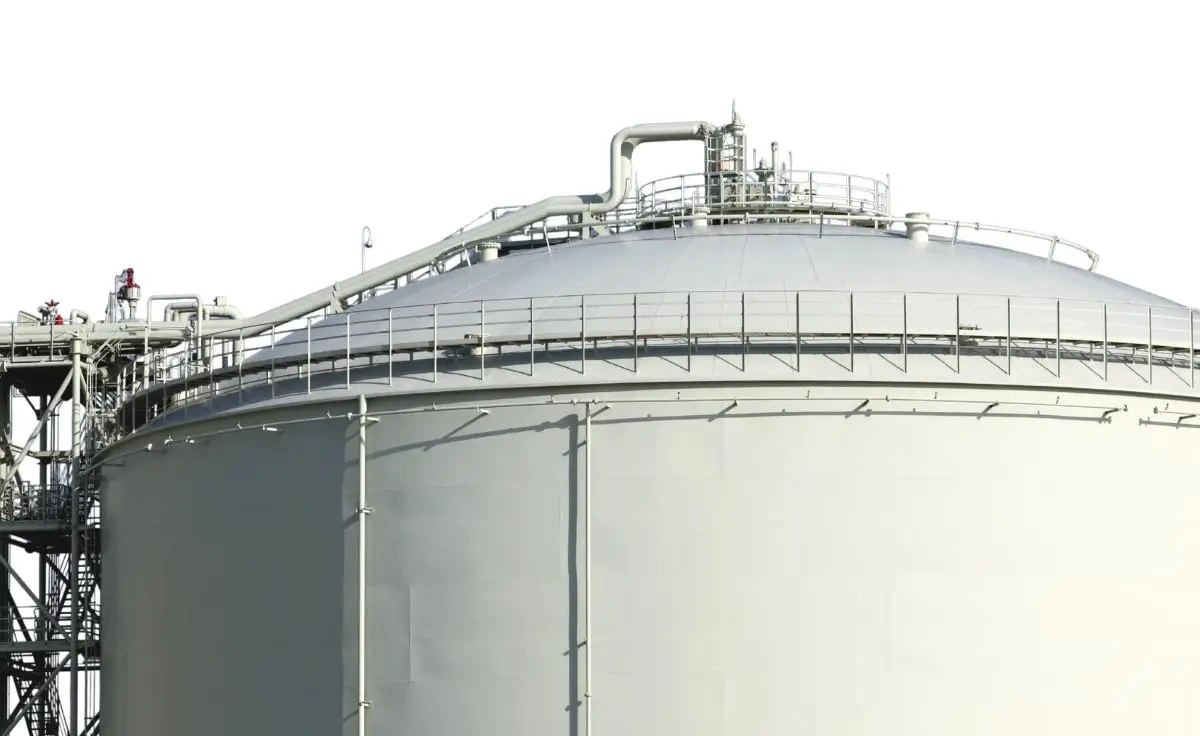
This was a full containment design with metallic inner and outer shells. The insulation arrangement:
API 625 is the overarching standard for refrigerated low-temperature liquefied gas storage. API 620 Appendix R covers the inner tank design specifics. Both must be documented in QA records, and compliance with the more stringent requirement always applies.
That last point comes through in almost every lesson in this blog. When the outer tank cannot be hydrotested, NDT is the only verification you have. For that reason, it should never be treated as a formality
Lesson 1: The Foundation Sets Everything That Follows
Foundation levelness is not a civil matter that gets handed off and forgotten. On a refrigerated ammonia tank erection project, top slab levelness within ±3mm over any 10m is non-negotiable because every tolerance that follows builds on it.
Once the foundation is accepted, outer bottom welding begins using a back-step, center-outward sequence to control shrinkage. Every bottom weld gets 100% vacuum box testing. Annular butt welds within the shell projection get 100% radiographic testing. Annular flatness matters here; waviness beyond 6mm in 3 metres will amplify shell verticality problems through the entire erection sequence.
Lesson 2: Perlite Blocks Are the Most Underestimated Item on the Project
Perlite blocks carry the entire inner tank vertical load including the full hydrotest water column. They also act as the thermal break between the cold inner shell and the warmer outer bottom. In cryogenic tank construction, this load path is critical and consistently underestimated.
If perlite blocks are laid unevenly, the inner tank settles unevenly during hydrotest. That settlement cannot be corrected once the inner annular plate is welded. Some projects have removed the inner annular plate entirely and re-laid the blocks at that stage of construction. It is one of the most expensive mistakes on a double wall tank construction project.
The surface after laying must be flat within ±3mm. Blocks must be surveyed, batch numbers recorded, and as-built thickness maps documented. Perlite blocks must never be exposed to moisture; one monsoon rain on unprotected perlite can force complete replacement.
Lesson 3: PUF on the Outer Shell Is Where Defects Hide Until It's Too Late
PUF on the inner face of the outer shell is one of the most process-sensitive operations in ammonia tank insulation engineering. Adhesion failure almost always traces back to primer issues. Spraying in lifts thicker than specified traps heat internally, chars the foam, and destroys insulation value without being visible on the surface.
Once the inner tank is in place, any PUF defect on the outer shell is unreachable. All inspection and rework must happen before the inner tank goes in. After PUF installation, no welding, grinding, or hot work on the outer shell from inside — PUF is flammable and the fumes are toxic.
Lesson 4: Inner Tank Erection
The inner tank is erected inside the outer shell using reference points from the outer tank centreline. Concentricity is checked at every course with a tolerance of ±25mm. Before the inner annular plate is welded, the perlite block surface is surveyed one final time to confirm uniform support.
Welding follows the same low-hydrogen, back-step sequence as the outer tank. PWHT is mandatory for ammonia service and cannot be deferred. Hardness surveys on all PWHT'd welds are recorded in the QA package, typically targeting ≤225 HV for carbon steel in ammonia service. 100% RT on shell verticals, full RT on horizontals and shell-to-annular welds, vacuum box test on inner bottom welds.
No copper, brass, zinc, or galvanised items anywhere in contact with the inner tank — including temporary instruments and scaffolding components. Ammonia stress corrosion cracking from a single non-compliant fastener is not theoretical.
Lesson 5: Dome Roof Erection
The dome-to-top compression ring weld is one of the most critical welds in a full containment tank design. It is a cold-service weld with no hydrotest verification on the outer tank, so 100% RT or UT is required. All dome NDT must be completed before the roof is landed.
On this project, the dome was erected by jack-up method rather than air-raising. This gives the advantage of ground-level assembly but demands strict discipline on cleat welding and overhead welding quality. All outer nozzles and manways must be completed before dome work begins.
Lesson 6: Suspended Deck and Mineral Wool
The suspended deck carries 250mm of mineral wool, which adds significant uniform load. Hanger rod tension must be equalised using torque or extension measurement on turnbuckles, with values recorded. The design must accommodate the downward thermal pull from the inner tank during cool-down.
Mineral wool must be dry at installation — drying in place is not effective. Wet mineral wool overloads the deck and permanently degrades thermal performance. Chloride content must be verified; for ammonia service the limit is typically below 10ppm. Install in layers with staggered joints to eliminate thermal bridges.
Lesson 7: Ammonia Cleanliness Is Not a QA Checkbox
No copper, brass, zinc, or galvanised items anywhere inside or in contact with the inner tank. This applies to every subcontractor and temporary instrument supplier, not just the main erection contractor. Even galvanised fasteners on temporary instruments have caused SCC in operating refrigerated ammonia storage tanks. Brief it, sign it off, and police it continuously throughout erection.
Lesson 8: Insulation Interfaces Are Where Defects Live
This double wall full containment ammonia tank has four different insulation systems — foamglass, perlite blocks, PUF, and mineral wool. The joints and transitions between them are where problems consistently appear on projects of this type.
A gap at the foamglass-to-PUF junction at the outer bottom corner creates a thermal short-circuit. Vapor barrier discontinuity at any transition causes moisture migration, ice formation, and insulation degradation over time. Every transition must be detailed, installed as designed, inspected, and documented with photographs because defects here affect tank performance for decades.
Lesson 9: Hydrotesting and Cool-Down
The inner tank Hydrotesting uses low-chloride water below 50ppm. Borewell and untreated municipal water have caused problems on API 620 / API 625 ammonia tank projects where this was not verified upfront.
Settlement monitoring requires measurements at minimum 8 points, preferably 16, recorded at 25%, 50%, 75%, and 100% fill, during the hold period, and after dewatering.
After Hydrotesting, the tank must be dried to a dew point below -40°C before product introduction. Cool-down rate for refrigerated ammonia is typically 5-10°C per hour. Before cool-down begins, verify piping flexibility and anchor freedom, confirm cool-down vapour source availability, and inert the tank with nitrogen. Oxygen content must be below 0.5% before ammonia introduction — trace oxygen contributes to stress corrosion cracking.
The Cross-Cutting Point
On this refrigerated ammonia tank erection project, the outer tank was not hydrotested. That decision, made for valid engineering and site reasons, increases the responsibility of everything else — NDT scrutiny, weld quality, welder qualification, inspection sign-off, and documentation.
No outer tank hydrotest means NDT carries the entire verification burden. PWHT, hardness control, and ammonia cleanliness are the three non-negotiables against in-service SCC. None can be partially complied with.
In Summary
The ammonia tank erection lessons captured here come from direct project experience on a double wall full containment tank built to API 620 and API 625. These lessons are not theoretical — they are based on real site issues, real delays, and real cost impact.
These lessons are valid for most of Double Wall Cryogenic Storage tanks such as LPG Double wall, Propylene Double wall, Ethylene Double Wall Cryogenic Storage tanks and like.
Get in Touch
To know more or discuss your project requirements, visit us at www.pmecheng.com or reach us at info@pmecheng.com