Why talk about Vibration Analysis?
“Unplanned downtime in Oil and Gas operations can cost millions every year. But how do you predict failures before they happen?”
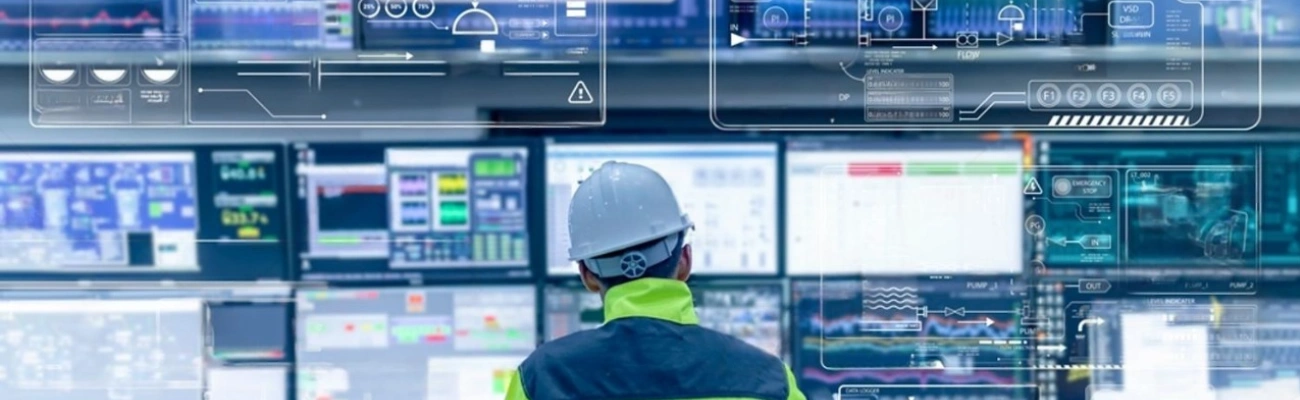
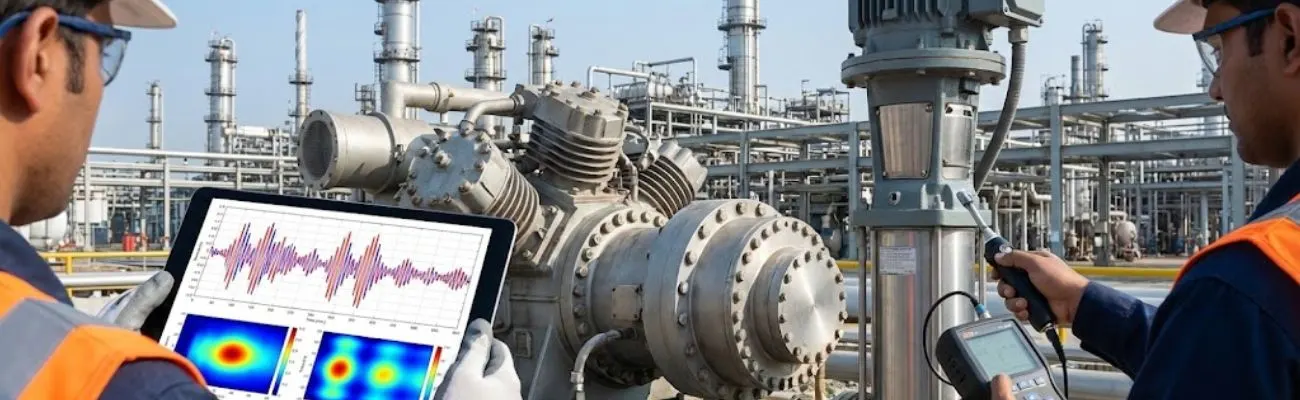
Unplanned downtime is a challenge Operators face frequently. The answer lies in Vibration analysis. Using a vibration analyser and modern vibration analysing instruments, engineers can monitor the health of the equipment in real time. Combined with simulation, vibration monitoring transforms troubleshooting into foresight, i.e., detecting flaws before they escalate into catastrophic shutdown.
Applications in the Oil & Gas Sector :
Q. What exactly is Vibration Analysis and why does it matter in Oil & Gas?
A. Vibration Analysis is the science of understanding how equipment and structures
respond to dynamic forces. In Oil & Gas, where equipment runs continuously under high stress, vibrations often
provide first signs of trouble.
Q. Which equipment failures cause the biggest losses?
A. Failures in vertical pump columns, compressors, gearboxes, gas turbines and
offshore risers can halt production entirely. A single breakdown doesn’t just cost in repairs, it costs a lot in
production, sometimes millions per day.
Q. How does vibration analysis detect problems before they happen?
A. By reviewing the vibration spectrum with a vibration analysis of the system,
engineers can spot imbalance, shaft misalignment, looseness or resonance long before failure.
Q. How can vibration monitoring improve safety?
A. Excessive vibration often indicates mechanical weakness that could lead to
accidents (e.g. Pump shaft breakage or gearbox failure). Early detection prevents the safety incidents.
Q. Is vibration analysis only for existing equipment?
A. No – Predictive simulations during design stage can avoid future issues. By
ensuring structural natural frequencies are safely outside operating frequency ranges, failures can be prevented
before operations.
Activities Involved in FEA Vibration Analysis :
A vibration study typically involves:
1. Identifying equipment where FEA vibration analysis is crucial :
2. Modelling in ANSYS Workbench :
3. Modal Analysis :
4. Harmonic/Forced Vibration Analysis :
5. Evaluation against Industry Standards :
6. Recommendations for Mitigation :
Challenges Typically Faced :
While conducting vibration studies, engineers often encounter :
How We Help Solve Vibration Issues :
PMech offers a complete vibration analysis package tailored for critical equipment. Using advanced simulation tools like ANSYS Workbench, we provide:
The result: fewer shutdowns, longer equipment life and safer operations.
Remember: Vibration analysis is not just troubleshooting – it’s foresight. With predictive modelling during design, you can avoid failures, cut costs and keep your assets running reliably.
Looking to reduce unplanned downtime and extend equipment life? Contact PMech today or write to our experts at info@pmecheng.com about how vibration analysis can help your equipment.